
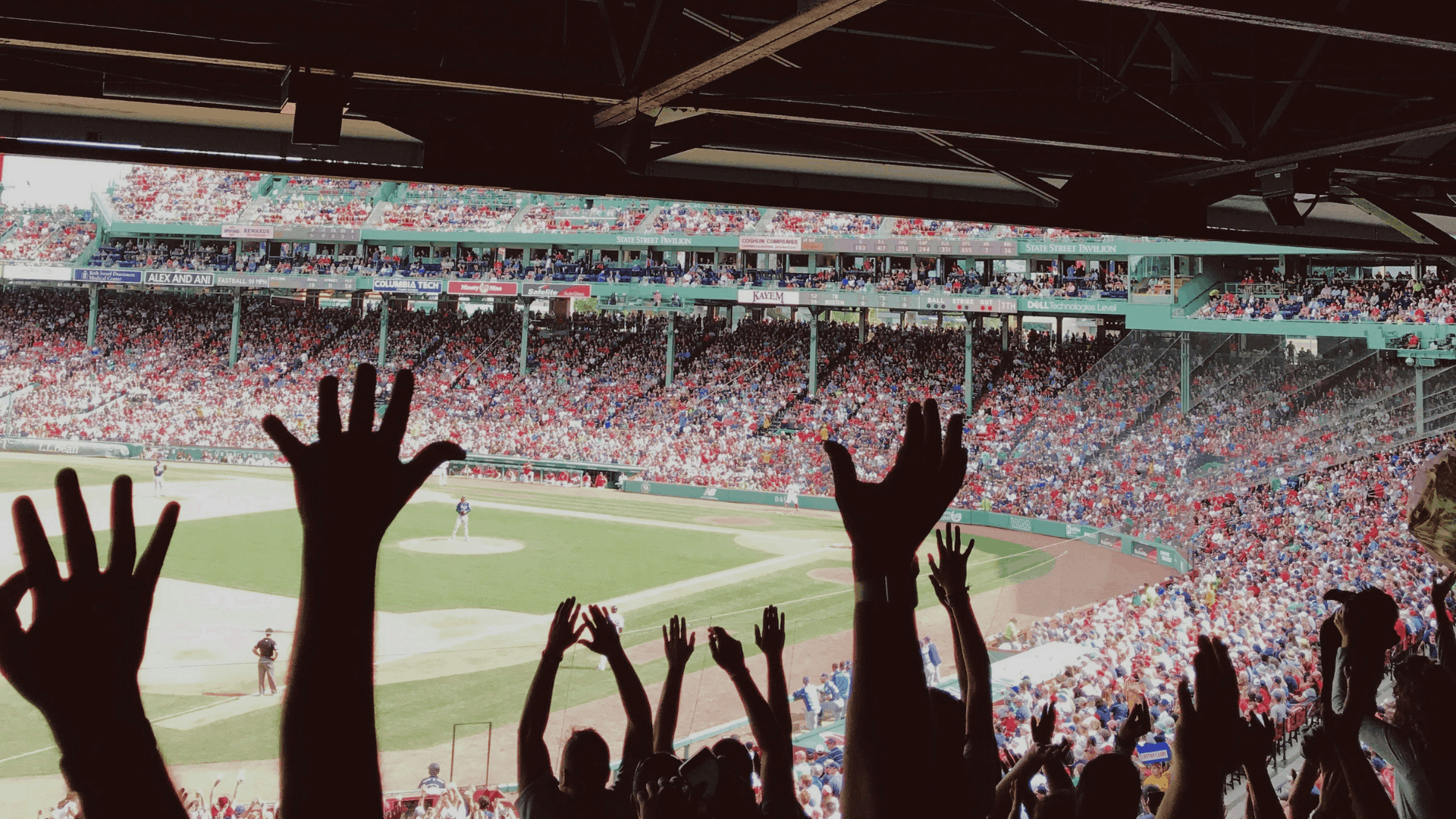
Turn on a sports game tonight. Any game, second period, middle of a Tuesday. Behind the action, there’s a sportsbook logo. The broadcast cuts to a graphic with a spread on it. An announcer mentions that somebody is two points from cashing an over. Maybe a commercial runs, maybe it doesn’t. It won’t matter much either way.
When the Washington Post ran fifty hours of televised football, basketball and hockey through an AI tool built to catch gambling logos, promos and verbal references, it found one about every four minutes. Every game in the sample had at least one. In hockey, references turned up in 60% of the minutes analyzed.
Here’s what should stop any media planner cold. Sportsbook advertising has been shrinking for years.
Fewer ads, more presence
Nielsen tracks this for the American Gaming Association annually. Sports betting ad volume has declined four years running. On television the drop is steeper still as the category airs roughly half the ad units it ran at its 2021 peak. Both things are true. The gap between them is the entire story.
The advertising didn’t get louder. It was integrated.
The game became the point of sale
For a few years after the Supreme Court opened the door in 2018, sportsbooks had a straightforward awareness problem, and awareness problems get solved with reach: blanket the airwaves, buy the celebrity, hammer the sign-up bonus. That phase ended when FanDuel and DraftKings won it. Live in-play betting, same-game parlays and player props turned wagering from something you did before kickoff into something you do continuously, at the speed of the broadcast.
The marketing followed it there, and the shape of the buy changed with it. FanDuel and DraftKings each spent well over a billion dollars in 2025, and that money didn’t evaporate when the spot count came down, it went somewhere harder to count. Rink and arena signage that appears in the broadcast whether or not anyone buys ad time. Odds baked directly into the graphics package. From studio segments, league partnerships, app integrations, affiliate and creator deals, sports betting expanded their reach across every touch point.
Read that as a media plan rather than a spending list and the strategy is plain: replace one expensive, avoidable, heavily resisted interruption with a dozen cheap, unavoidable, low-friction touchpoints distributed across the entire viewing experience. Comparable reach. More repetition. Almost no resistance.
That move is worth naming plainly, because it isn’t really about gambling. Sportsbooks stopped interrupting the thing people came for and became part of it. They solved the connection problem – not by making better commercials, but by making the commercial close to unnecessary.
Which leaves a measurement problem every advertiser should sit with: Nielsen counts commercials. It doesn’t count the environment. If your numbers say you’re advertising less and fans say you’re everywhere, the fans are right. What counts is how often people feel like they’re seeing you, not how much you bought.”
A competitor nobody was tracking
In 2025, Kalshi became the most-seen sports betting brand in America by digital ad impressions, ahead of FanDuel, without holding a state gaming license. The NFL barred prediction markets from advertising in the Super Bowl broadcast – a league drawing a line the law hasn’t drawn yet.
The category got significantly louder from a direction the standard trackers weren’t pointed at.
The audience noticed
Ipsos has been asking Americans since 2023 whether sports betting hurts the integrity of the game. In early 2025, 41% said yes. By March 2026, 56% did. Roughly half of sports fans say they’d back banning betting ads during games outright.
The harm data moved with it: the share of bettors who report seeking help for a gambling problem rose from 9% to 15% in a single year. Then in October 2025, federal indictments named an NBA head coach and an active player in schemes involving wagers on player performance – the same in-the-moment product the embedded strategy exists to sell.
The cost of doing it well
Fewer ads, more presence, less resistance. That is what working smarter instead of harder actually looks like when somebody pulls it off.
Integration is durable, but it isn’t separable. You can’t be skipped when you’re inside the content, and you can’t be untangled from it if sentiment turns. Sportsbooks built an audience that no longer distinguishes their marketing from the game, which is exactly why the backlash landed on the game. They aren’t being judged as advertisers anymore. They’re being judged as part of the sport.
And if you buy sports, betting is your environment now. Your spot is running in a broadcast with a betting reference every four minutes, in front of an audience measurably souring on it.
The lesson isn’t to avoid what the sportsbooks did. It’s that becoming part of the content is a far larger commitment than buying time around it. You inherit its attention, and you inherit its blame.