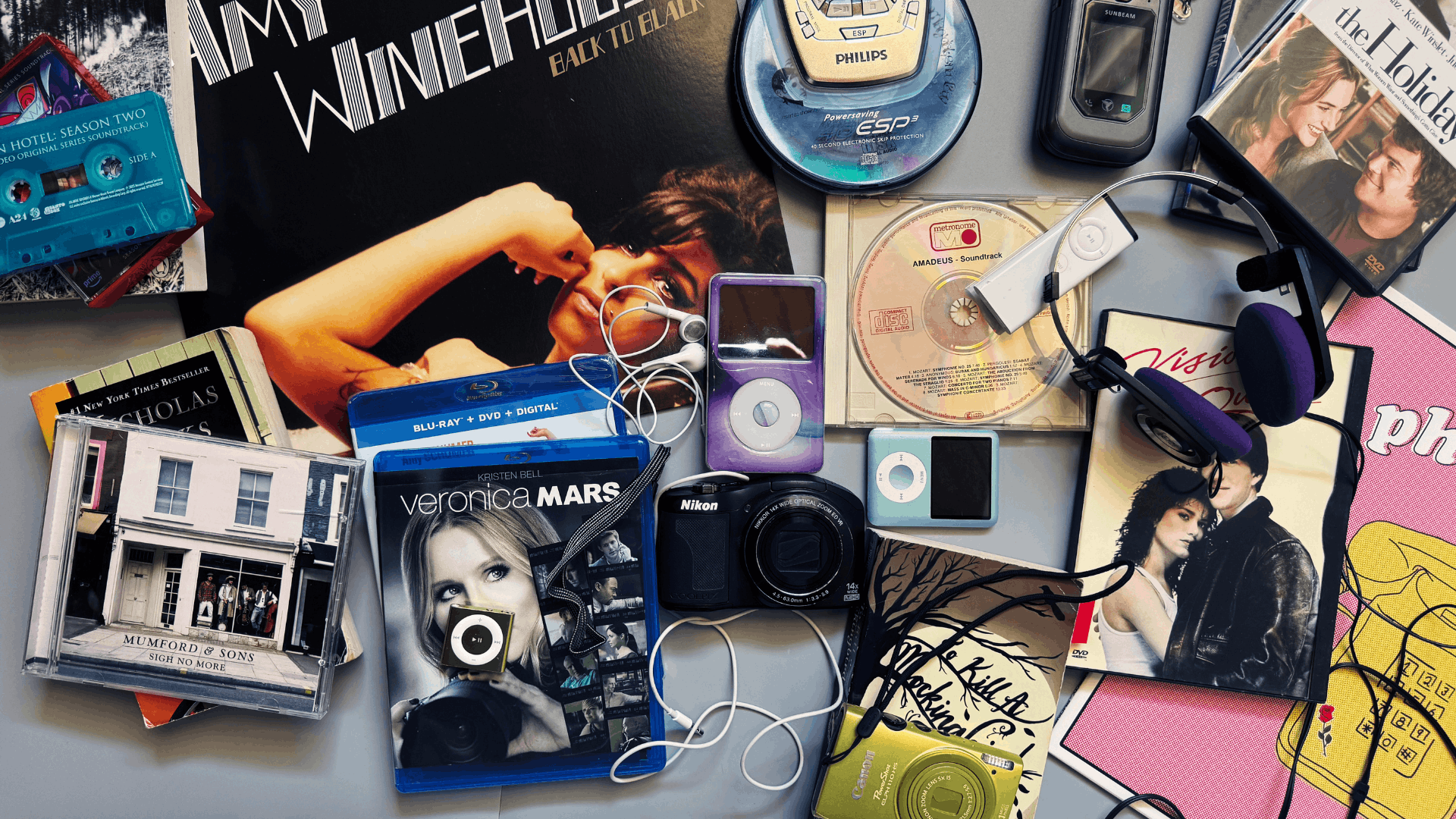

Break out your Motorola Razr and dust off your IPod nano.
We’re seeing more of the younger generations embracing older technology and pushing back against hyperconnectivity. The reasoning behind this trend varies from nostalgia to searching for more simplicity to digital detoxing and striving for a mindful balance. Combining the old with the new.
Embracing Yesterday
Whether searching for comfort, or to escape from a world of unknowns, nostalgia buying is growing increasingly popular. Bringing forward a mix between curiosity towards simpler times and more present experiences and tangible connections, is analog starting to feel more authentic?
Senior Integrated Media Planner, Jace Aspling started collecting more “vintage” tech (iPods, CDs, vinyl) as a fun throwback, but found that sometimes simple is even more functional (and they never wanted to be free of wired headphones).
And some things just aren’t as at our finger tips as we might have thought. Physical media (CDs, DVDs, books) is making a comeback – so whether you want to amplify your experience or collect your favorites, we’re seeing more and more hard copies. Amanda Melby, True Media Senior Activation Strategist, said she started her DVD collection after seeing a rise in costs of streaming services and finding some of her favorite movies weren’t included. She now considers buying a physical copy when any movie she loves comes out.
According to Google Trends, there has been a dramatic spike in the search for “Listen to Music Not On Phone” as well as searches for devices such as IPods, MP3 players and even portable cd players. Between school phone bans restricting smart devices coupled with nostalgic curiosity has sent people to resale sites like eBay to find an alternative for music access within the digital boundaries.
Mindfully Unplugging
According to a 2025 World Health Institute study, 72% of people under 35 experience regular anxiety connected to screen overuse. Younger generations are setting intentional boundaries that are allowing people to be more present rather than tied to notifications and constant noise.
Aspling talks about wanting to find better ways to use their phone less because it was taking time away from what they enjoy doing. “Using “one purpose” devices is more intentional. Taking time to focus on music or movies on their own is grounding and helps me think better.”
Integrated Media Planner, Gabby Foss has adapted several less connected devices and analog processes after a goal to intentionally unplug on a day trip. This experience sparked her to research and reevaluate her dependence on smart devices. “The goal was to be more present in the moment – so I left my phone off and in my bag all day. I woke up to a digital alarm clock, took the Amtrak, and navigated the town using a paper map that I found at the train station. It was a day full of exploring but every time I got a little bit bored, like waiting in line, I had the urge to check my phone.” Foss now uses a flip phone, digital alarm clock, digital camera, analog watch, planner/journal, and an iPod Shuffle. She really enjoys having devices that just do one thing so she doesn’t get distracted looking at messages when her intent was to check the time or listen to music.
Undigital World
Digital detox weekends, screen free meetups and more analog hobbies are all growing in interest, changing how we interact with the world around us.
According to Foss, choosing more disconnected devices isn’t as all or nothing as she thought it would be but more about the intention you put behind it. “Even though we’re using the term disconnected I feel more connected to the present and to the people around me.”
As younger people are being more intentional towards screen time, there is a rise (or a resurgence) in more analog hobbies. From knitting or needlepoint, to games like mahjong to reading and crafting groups are popping up, allowing people to connect more in person. Aspling mentions trying to focus more on experiences and handheld hobbies – “It’s helped me get out of my shell and stretch my creativity.”
No One Size Fits All
Mindsets and trends may be shifting but not all at the same speed. “I feel like a bit of an outlier among my peers for collecting physical media,” shared Melby, who sees both professionally and personally how digital-focused media is still right now.
Being mindful of this trend, marketers need to look at adjusting tactics to meet consumer needs, highlighting the need for prioritizing cross-channel plans. “If we’re promoting to younger audiences, it’s important to think of campaigns through a multi-channel lens. If we put our eggs all in the social basket and Gen Z continues to try to unplug, we need to also look at what the data supports and try implementing other tactics like OOH or display,” says Aspling.
Emphasis in a diverse media mix (including OOH, direct mail etc.) – like broader consumer trends, media needs to show up where their target audience is at. Reaching audiences both online and offline is key with younger generations. Targeted campaigns that reach audiences directly through showing up in stores, in conversations and in-hand as well digital platforms. A (strategically placed) billboard or mural can become art, a landmark, or a cultural moment that grabs attention that can authentically connect with consumers. Direct mail that stands out among junk and bills can really pack a punch.
With the rise in IRL Marketing + Hobby-based activities, it’s about showing up for consumers – not just where they are but in what they’re doing too. As activities shift, so does where products show up. People are being intentional about their screen time so brands must do the same. Mixing experiential and digital tactics can reach audiences at different stages of their buying journey. Building FOMO by creating limited runs can build buzz on social media while building authenticity and physical connection in a digital world.